Happy Arrow Master
- 4.7
- Rating
- 500.00K
- Installs
- Free
- Price

 Analysis by App-foxy
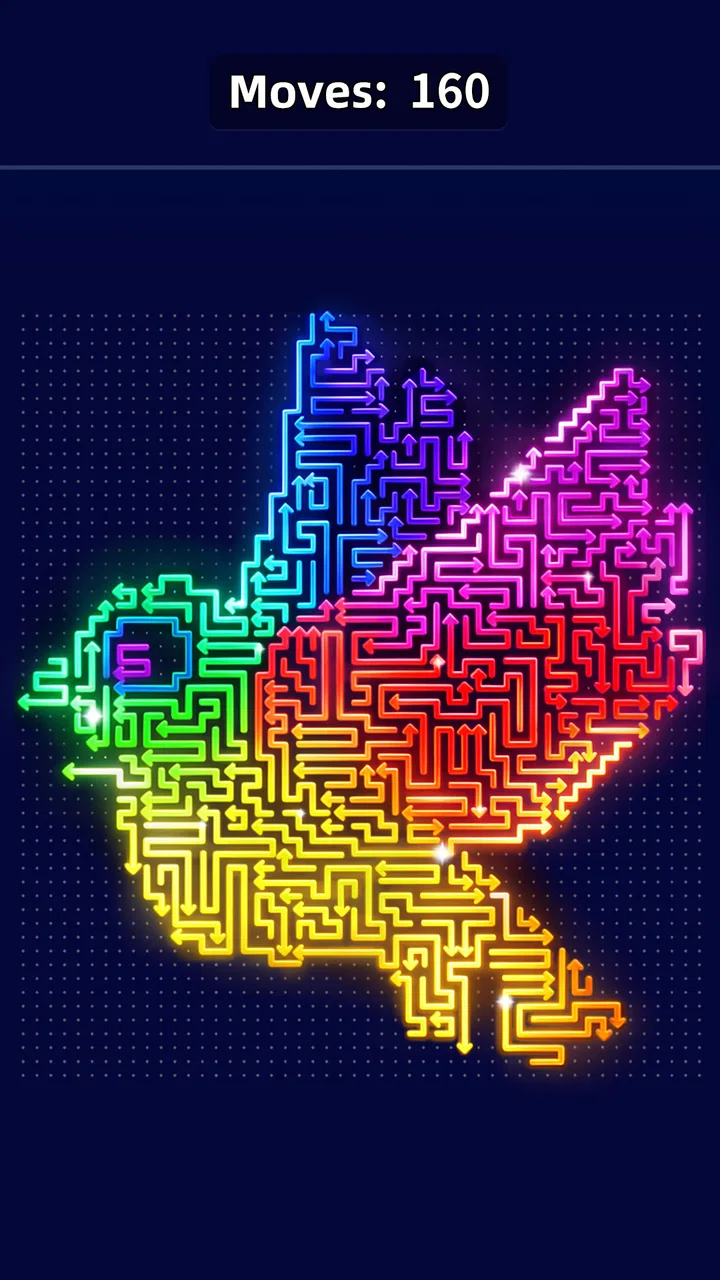
Happy Arrow Master is the kind of casual game I can open without preparing myself for a long session. The central idea is immediately readable: tap intelligently, remove obstacles in the right order, and help every arrow leave the board. That simplicity is its strongest first impression. I do not need a tutorial-heavy explanation or a large commitment before the first puzzle makes sense.
After spending time with it, I see the appeal more clearly. This is not trying to replace a deep strategy game, and it is not built around a large story or complicated collection system. Its value comes from giving me a small problem, a visible goal, and the satisfaction of finding the clean sequence that makes the arrows move. For players who enjoy compact brain teasers during spare moments, it is an easy game to understand and a surprisingly pleasant one to revisit.
Why the first few puzzles work so well
The opening experience is effective because the game communicates through the board itself. Arrows point toward their exits, blocked paths suggest what needs attention, and the player quickly learns that tapping anything at random is not always the best approach. I found myself scanning the arrangement before touching the screen, looking for the arrow that could move without interfering with the rest.
You May Also Like

 Pandora - Music & Podcasts
Pandora’s Music Is Easy to Start, but Harder to Recover
Pandora’s strength is its low-effort path from a seed to a station. Its weak spot is how much confidence it asks you to place in connection, setup, and quiet recovery.

 AccuWeather: Weather Radar
AccuWeather Review: A Quick, Clear Forecast for Everyday Decisions
For everyday plans, the best forecast is the one you can understand quickly. AccuWeather makes rain timing, radar, and local conditions easy to act on, with a few trade-offs.

 Hill Climb Racing
Why Hill Climb Racing Still Turns Crashes Into One More Run
A tiny car, a bumpy hill and one more upgrade: Hill Climb Racing keeps resurfacing because its simple chaos makes every near-miss feel personal.

 AliExpress - Shopping App
AliExpress Makes Global Shopping Feel Personal, but Shoppers Bear the Risk
AliExpress turns a global marketplace into a pocket-sized discovery engine. Its reach is useful, its shopping loop compelling, and its trade-offs easy to miss.

 Lords Mobile: Kingdom Wars
Lords Mobile Is a Kingdom-Building Routine, Not a Quick Match
A case-by-case verdict on the building, battles, device demands, and social commitments that make Lords Mobile rewarding for some players and exhausting for others.

 PDF Scanner app - TapScanner
TapScanner Makes Paperwork Easier to Capture, Check, and Share
TapScanner makes scanning with a phone feel less like a rescue operation and more like a dependable step in getting work done. Its capture tools are useful, though not flawless.
More From Our News Desk
View All News


That small pause before a move is where the game gets its personality. The interaction is casual, but the solution still rewards observation. A successful sequence feels earned without becoming exhausting. I never felt that I needed a notebook or a complicated plan; I simply needed to slow down enough to notice how one obstruction affected another.
The developer, DRAGONVALE LIMITED, has positioned the game in a familiar but accessible part of the casual puzzle space. Its store summary describes the basic goal in a few words, but the actual enjoyment comes from the difference between understanding the objective and finding the correct order. That distinction gives the short levels more substance than a purely reflex-based tap game.
I also appreciate that the premise is friendly for a broad audience. The content rating is Everyone, and the presentation is built around harmless visual problem-solving rather than pressure from a complicated theme. A child can understand the basic task, while an adult can still enjoy trying to clear a crowded arrangement efficiently. It is a good fit for shared, low-stakes play, although younger players may still need help with the idea that some moves should be delayed.
A rhythm designed for spare minutes
The best way to play is in small bursts. I can start a puzzle while waiting for a kettle to boil, during a short commute pause, or between two larger tasks. The game gives me an immediate objective instead of asking me to remember a long chain of events. That makes it particularly comfortable when my attention is divided or when I only want a few minutes of entertainment.
What makes the rhythm work is the balance between thinking and action. A board may look busy, but the next useful step is often visible once I inspect the available paths. Then the interaction becomes quick: identify the safe arrow, tap it, watch the space open, and reassess. This cycle gives each puzzle a natural beginning and end rather than turning every session into an endless stream of identical taps.
In an everyday situation, I would use it as a mental reset after answering messages or before starting another piece of work. I can play one board, stop at a natural point, and return without feeling that I abandoned a complicated campaign. That is more important than it sounds. Many casual games are easy to launch but awkward to leave; this one is better when treated as a series of small puzzles instead of a game demanding a long uninterrupted sitting.
The immediate pleasure is strongest when I solve a board without needing several attempts. There is a simple visual reward in watching the arrows clear one by one, and the result is easy to understand. I do not have to interpret a score screen to know whether I succeeded. The board itself provides the feedback.
Still, the same simplicity creates a limit. If you want constant novelty, dramatic events, or a changing set of mechanics, the basic arrow-clearing loop may feel narrow. The game is at its best when you enjoy refining your attention inside a consistent rule set. It is less suitable for someone looking for a casual game that continually introduces new characters, narratives, or large strategic systems.
How to think through a crowded board
My most useful habit is to avoid tapping the first arrow that looks available. I first check whether its path is genuinely open and whether moving it will reveal a better option. This prevents the common mistake of treating the board as a reaction test. The game rewards a quick visual scan more than hurried fingers.
A second useful approach is to work from the clearest exit inward. When several arrows are visible, I look for the one whose route appears least dependent on other pieces. Clearing that route can reduce the visual clutter and make the remaining choices easier. This is not a complicated strategy, but it changes the experience from guessing to sequencing.
I also recommend pausing after every major clearance rather than tapping continuously. The board can change enough after one arrow leaves that the original plan is no longer the best plan. Taking a moment to re-read the new arrangement helps preserve the satisfying puzzle element and reduces unnecessary mistakes.
These habits are especially useful for players who normally avoid puzzle games because they assume they require advanced logic. Happy Arrow Master stays approachable because the reasoning is visible. You are not calculating hidden values; you are reading directions, space, and order. That makes it a gentle introduction to spatial sequencing.
Stopping and returning without losing the mood
Interruption tolerance is one of the game’s strongest qualities for my routine. Its short-session design means I can put it down when something else needs attention, rather than feeling trapped in a long round. When I return, the objective remains straightforward: inspect the current board and decide which arrow should move next.
That makes it different from casual alternatives built around timed runs or real-time competition. In those games, leaving at the wrong moment can waste progress or break the entire session. Here, the mental load is lighter. I can stop after a completed puzzle, or pause while considering a board, and the experience still feels manageable when I come back.
This quality also makes it suitable for people who play with frequent interruptions. Parents, commuters, and anyone fitting entertainment around chores may prefer this structure to a game that expects a continuous twenty-minute block. I would not call it completely frictionless, because any puzzle can become annoying if I return while distracted and immediately make a poor move. Even so, the game does not depend on sustained concentration for its basic enjoyment.
For the smoothest experience, I treat each board as a self-contained mental bookmark. I finish one whenever possible, then close the game instead of forcing myself to continue simply because another puzzle is available. That keeps the activity refreshing. Playing too many similar boards in one sitting can make the pattern feel more mechanical, while stopping at the right moment preserves the sense of a quick win.
Where replay value comes from
The replay value is not based on a huge amount of variety in the core action. It comes from the desire to improve how I read a board and from the convenience of having a puzzle ready whenever I want a short distraction. I may return because I have a few idle minutes, but I also return because a previous arrangement made me notice that my first instinct was not always efficient.
That distinction matters. If you need a game that changes dramatically from one session to the next, this may not hold your attention indefinitely. The arrow-and-path concept is focused, and repeated play can expose that focus. On the other hand, players who like familiar rules with different arrangements may find the consistency comforting. The game does not ask me to relearn its identity each time I open it.
I think of it as closer to a pocket puzzle book than to a full-scale progression game. I can enjoy a few pages, put it away, and return later. The pleasure is in the individual challenge and the clean completion, not necessarily in building a large virtual collection or following a narrative arc. That makes its replay value personal: strong for people who enjoy repeating a satisfying mental routine, weaker for players who need constant surprise.
There is also a trade-off between speed and satisfaction. Clearing a board quickly can feel good, but rushing may remove the small reasoning step that makes the game worthwhile. I get more from it when I aim for confident decisions rather than frantic tapping. In that sense, the game rewards a calmer style of play, even though the controls themselves are simple.
Free access and the practical trade-off
The game is free to download, which makes trying it straightforward. That is useful for a casual title whose appeal depends heavily on whether its particular puzzle rhythm suits you. You can discover that fit without first committing to a purchase. The age rating also makes it easier to consider for a general household device.
There are in-app purchases ranging from $1.99 to $99.99 per item. That range is worth keeping in mind before handing the game to a child or leaving purchasing unrestricted on a shared device. The free entry point is appealing, but the presence of optional spending means I would review the device’s purchase controls if several people use it.
I do not judge the game solely by the existence of purchases, but they affect how I recommend it. If your ideal casual game must be entirely free of purchase prompts or monetization considerations, you may prefer a paid puzzle title with a single upfront cost. If you are comfortable trying a free game and deciding for yourself whether its interruptions or optional extras bother you, the low barrier makes this one easy to sample.
The current release is version 1.0.11, and it requires Android 8.0 or later. That makes compatibility an important practical check for anyone using an older device. On a supported phone, the game’s concept should be easy to understand immediately; the more important question is not technical complexity but whether you enjoy its focused loop.
How it compares with other casual choices
Compared with match-three games, Happy Arrow Master asks for less pattern hunting and more attention to direction and order. A match-three title often encourages repeated combinations and a longer chain of effects. Here, the satisfaction is more deliberate: I identify a route, make a move, and see whether the board opens as expected.
Compared with endless runners, it is far more interruption-friendly. There is no need to maintain reflexes from one second to the next, so I can play when I am mentally available but not ready for pressure. The trade-off is that it lacks the adrenaline and speed that make runners exciting.
Compared with classic solitaire-style games, it has a more visual and immediate objective. I do not need to manage a hand of cards or remember a larger set of rules. The arrows show me the problem directly. Solitaire may offer more familiar variation for some players, while this game offers a cleaner, more focused task.
Compared with deeper logic puzzlers, it is easier to enter but less intellectually demanding. That is not a flaw unless you are specifically looking for multi-step deduction that can occupy you for a long time. I would choose this game for a short reset, and a more involved puzzle game when I want to concentrate seriously.
Who should play it, and who should skip it
I would recommend it to anyone who likes compact puzzles, visual order, and games that can be enjoyed without a fixed appointment. It suits players who want a clear goal within seconds, people who prefer calm interaction over reflex pressure, and anyone looking for a small activity between larger responsibilities.
It is also a reasonable choice for families seeking an approachable game with an Everyone content rating. The main lesson is easy to demonstrate: do not just tap; look at the path and choose the useful order. That makes it possible for a new player to understand the appeal quickly, even if some boards require more patience.
I would skip it if you need a strong story, competitive multiplayer, character development, or a constantly expanding set of systems. I would also be cautious if repeated use of one core mechanic quickly frustrates you. The game’s strength is focus, and focus can feel like repetition when your preferences lean toward variety.
Its audience numbers suggest that the concept has found a receptive casual crowd, with an average rating of 4.8 from around 3.3 thousand ratings and more than 100 thousand installs. Those figures do not replace personal taste, but they match my impression that the game delivers its basic promise effectively for the people it targets.
My casual verdict
Happy Arrow Master succeeds because it understands the value of a small, readable challenge. I can open it, see what needs to happen, make a few thoughtful taps, and leave without feeling that I have started an obligation. The immediate pleasure is genuine, especially when a crowded board suddenly becomes clear after the right sequence.
Its weaknesses are equally clear. The focused mechanic may become repetitive for players who want constant novelty, and the in-app purchase range means shared devices deserve a little care. It is not the game I would choose for a dramatic evening of entertainment or a deep strategic session. I would choose it while waiting, unwinding, or looking for a quiet mental change of pace.
My final recommendation is positive but specific: try it if your priority is short-session clarity, easy interruption, and a little visual problem-solving. Play slowly enough to read the board, stop after a satisfying puzzle, and do not expect the game to transform into a larger genre experience. As a free casual game from DRAGONVALE LIMITED, it earns its place through accessibility and a clean rhythm rather than excess.
For me, that is enough. The game does not need a complicated identity to be useful. When I want a quick puzzle that respects my attention and gives me a clear finish line, Happy Arrow Master is an enjoyable choice.
FAQs for Happy Arrow Master
01What is Happy Arrow Master and what type of game is it?
Happy Arrow Master is an engaging mobile game that combines elements of strategy and precision shooting. Players take on the role of a skilled archer aiming to hit various targets across challenging levels. The game is designed to test your accuracy and timing, offering a fun and addictive experience for both casual and dedicated gamers.
02Is Happy Arrow Master free to play, and does it have in-app purchases?
Yes, Happy Arrow Master is free to download and play. However, it does offer in-app purchases for players who wish to enhance their gaming experience. These purchases can include additional arrows, power-ups, and customization options. While they can enhance gameplay, they are not necessary to enjoy the game fully.
03What are the device requirements for installing Happy Arrow Master?
To install Happy Arrow Master, your device must meet certain requirements. For Android users, a device running Android 5.0 or higher is recommended. iOS users should have a device running iOS 10.0 or later. Ensure you have enough storage space and a stable internet connection for optimal performance.
04Does Happy Arrow Master offer multiplayer or social features?
Happy Arrow Master primarily focuses on single-player gameplay, but it does include social features such as leaderboards. Players can compete with friends or other players worldwide to achieve the highest scores. Currently, there are no direct multiplayer modes, but future updates may introduce new social elements.
05How often does Happy Arrow Master receive updates and new content?
The developers of Happy Arrow Master are committed to providing a dynamic gaming experience, regularly releasing updates to fix bugs and improve gameplay. New levels, challenges, and features are added periodically to keep the game fresh and engaging for players. It's recommended to enable automatic updates to ensure you receive the latest content.
Pros
- Engaging gameplay with challenging levels.
- Smooth controls enhance user experience.
- Vibrant graphics and animations.
- Regular updates with new content.
- Offline mode available for play anywhere.
Cons
- Ad frequency can be distracting.
- In-app purchases can be pricey.
- Limited character customization options.
- Some levels feel repetitive.
- Occasional lag on older devices.

Happy Arrow Master
Gallery